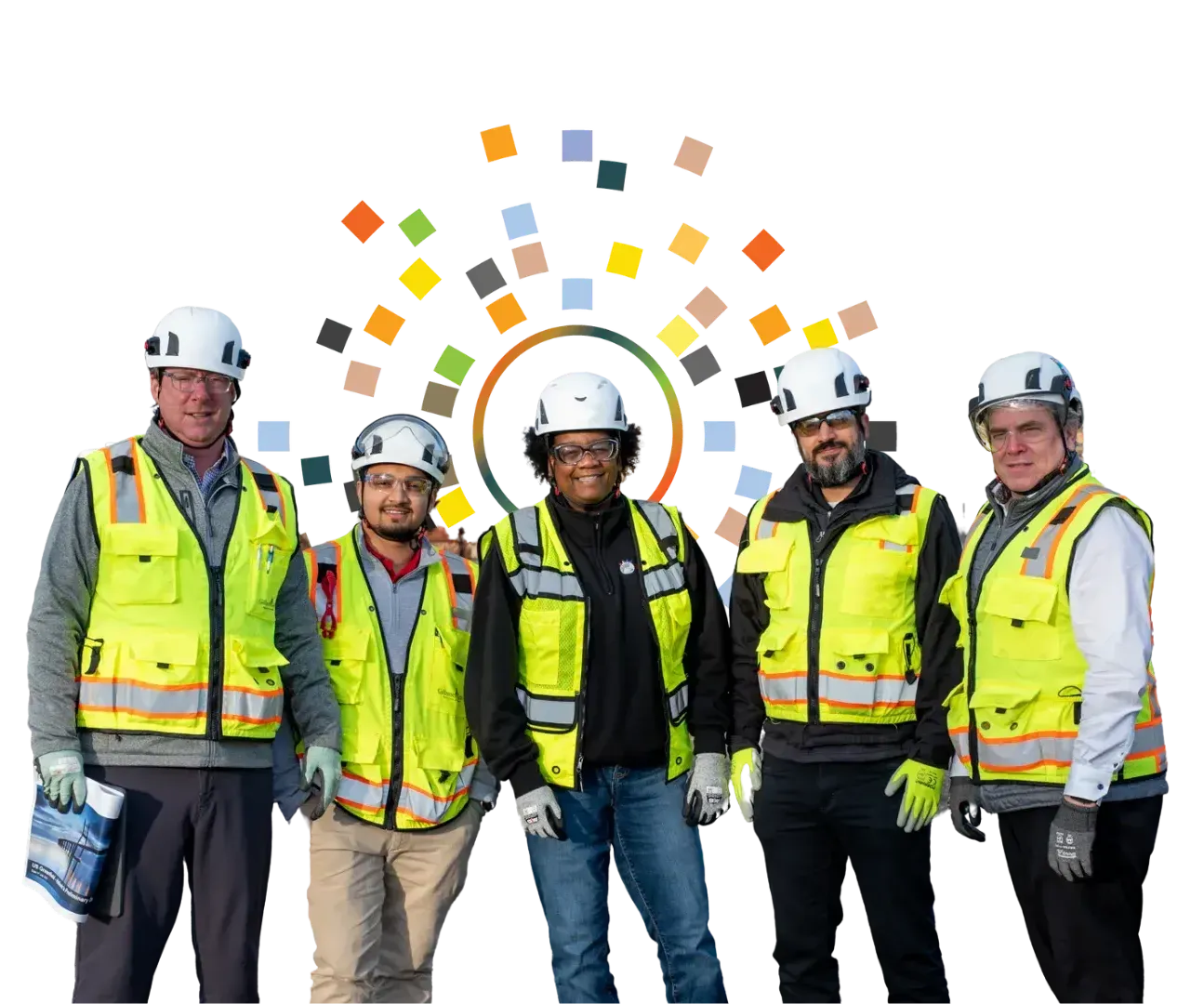

Opening Doors to Construction Careers:
The 2026 Craft Leader Panel
The construction industry supports more than 8 million workers. Over the next decade, more than 30% of the current workforce will reach retirement age, creating more than 4 million positions that need to be filled.
So how do we attract and retain the next generation?
Construction Inclusion Week 2026 brings together professionals from across the industry to explore that question, and to challenge outdated perceptions about what a career in construction can look like. Thinking about what comes after high school, or ready for a career change? Hear from people who chose the trades and find out what the path really looks like.

Share the QR Code above with your team!


Make construction a Plan A for the next generation
Download our companion discussion questions to help your team challenge misconceptions about careers in the trades, create stronger pathways into the industry, and empower the next generation to earn a high wage without college debt.
Why Construction? Build Something You Can Point To
Construction is one of the few careers where you can watch your work go from foundation to finished building. Panelists talked about the pride of seeing a project through, the satisfaction of solving problems others couldn’t, and the teamwork of building spaces that serve communities for generations.
Many people assume the trades are dirty, low-paying work for people who don’t go to college. Panelists say the reality is different: tradespeople can earn a high wage, without college debt, and by their third or fourth year, apprentices often earn more than high school teachers or entry-level data scientists. College isn’t the only path to success after high school. Carpenter apprentices can start around $36 an hour with regular annual raises, so you earn while you learn and build skills that stay with you.
And for many, the work stops feeling like labor and becomes something they genuinely enjoy.
Key Insights and Takeaways
This panel moves beyond traditional recruiting advice to offer an honest, multifaceted look at building a career in the trades. Key topics of discussion include:
Career Pathways Beyond the Field
Discover how registered apprenticeships build lifelong careers and serve as stepping stones to roles in CAD and drafting, estimating, project management, engineering, business ownership, and executive leadership.
The Power of Early Exposure
Learn why introducing students to the trades through middle-school programs, internships, and career and technical education (CTE) is critical to building a sustainable talent pipeline.
Honest Expectations for Newcomers
Get a candid view of what employers actually look for: teachability, punctuality, and initiative, as well as the physical demands and real-world hurdles early talent faces.
A Modern, Tech-Driven Industry
Hear how construction is evolving beyond tools and trucks to incorporate field technology, custom software, and AI.
Meet the Panelists
The panel features real career stories from professionals working across the industry, from a first-year apprentice to a licensed electrician to a vice president at a mechanical contractor:

Mysoun Patrick
First-Year Carpenter Apprentice, Turner Construction
Mysoun’s path started in 9th grade with a youth trades program in Washington, D.C., where he learned about safety, electrical work, plumbing, and carpentry. He chose the trades to build practical skills and start earning right away, and today he returns on Saturdays as an assistant instructor for the next group of young builders.

Toni Casey
Electrician, Apprenticeship Program Experience, DOEE
Toni's path to the trades began with a high-school summer internship at a prefab shop, where she discovered her enjoyment of the work and the strong earning potential of electricians. Today, she works in workforce development, helping students explore opportunities in the electrical industry.

Anne Finerfrock
Vice President, WE Bowers
Anne oversees corporate initiatives, shop fabrication, and workforce development at WE Bowers, a large union mechanical contractor. She entered the industry after a transformative summer internship and transitioned into project management and preconstruction. During the panel, Anne discusses how modern jobsites rely heavily on field and application technology. She emphasizes that field experience is often just a launching pad for roles in CAD drafting, estimating, engineering, and executive leadership, and reminds newcomers that employers are ultimately looking for teachability, strong fundamentals, and a willingness to learn.
Explore Companion Resources
The conversation doesn't stop when the video ends. We have provided tailored resources to help you take action on your jobsites and in your community:
DISCUSSION QUESTIONS
Download a companion discussion guide to help your team talk about local recruitment, challenge misconceptions, and build stronger pathways into the industry.
SCHOOL RESOURCES
Use the panel as a classroom-ready conversation starter about trade careers as a Plan A, and explore outreach materials designed to connect with local students.
TOOLBOX TALKS
Download ready-to-use, zero-prep discussion guides to help your project teams talk about jobsite culture, active respect, and day-one retention during morning huddles
WORKFORCE DEVELOPMENT
Discover actionable ways leading contractors and trade programs are cultivating supportive environments, solving workforce challenges, and engaging their communities.